
Data vs Gut Feel: The Quiet Killer of Ecommerce Growth
In ecommerce, there’s a moment most founders eventually face.
The data is clear.
The opportunity is visible.
The path forward is measurable.
And yet… the business hesitates.
Not because the numbers are unclear — but because the answer doesn’t feel right.
Over the past three decades working in ecommerce and search, I’ve seen the same pattern repeat itself with surprising consistency. Businesses don’t usually stall because of poor products, weak design, or even lack of demand.
More often than not, growth stalls because decisions are being driven by instinct in areas where the data is already telling a different story.
The Visibility vs Click Gap
(The Silent Warning Sign)
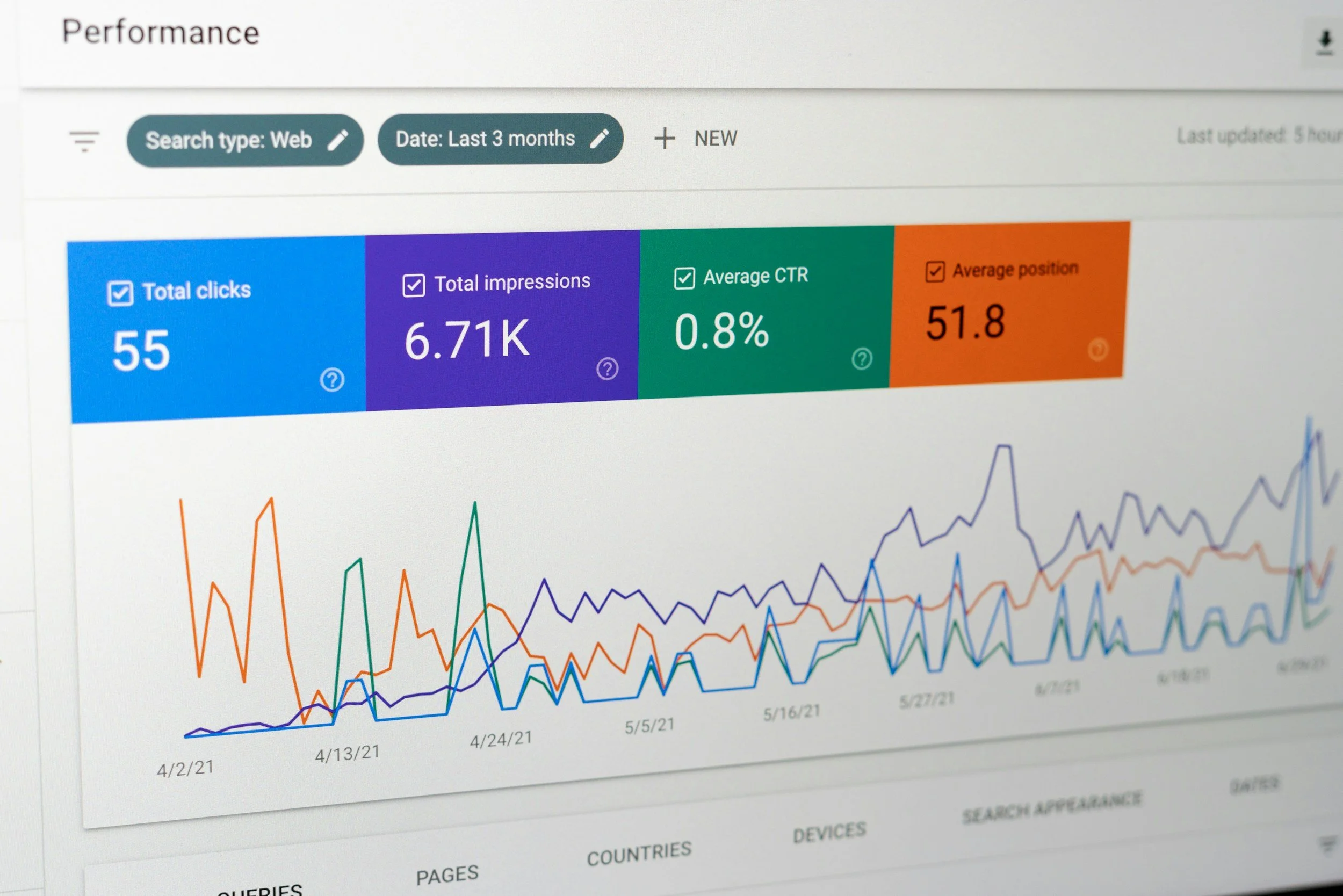
One of the clearest early warning signals in ecommerce is what I call the visibility–engagement gap.
This is where:
Google is already showing your site
impressions are healthy
rankings are reasonable
but clicks and sales lag behind expectations
When this pattern appears consistently across core and modifier terms, it is rarely a metadata problem.
It is almost always structural.
In practical terms, the site is being seen — but not chosen.
And that usually points to misalignment between:
how customers search
how the site is structured
and how quickly users can reach the product they had in mind
No amount of surface-level optimisation fully fixes that.
The Brand Comfort Trap
Here’s where many businesses get stuck.
Founders quite rightly care about:
brand clarity
visual quality
premium positioning
storytelling
All important.
But problems start when brand comfort begins to override discoverability.
Because modern ecommerce growth doesn’t come from choosing between brand and structure.
High-performing sites do both.
If you look at brands like Boden, Cambridge Satchel, John Lewis or Next, you’ll see a consistent pattern:
clean brand presentation
but highly structured, search-aligned navigation
multiple discovery pathways
strong internal taxonomy
This isn’t accidental. It’s how scalable ecommerce works in 2026.
The Reality Most Site Owners Miss
Search behaviour is not tidy.
Customers don’t all browse neatly by product family.
They search by:
size
use case
room
modifier
problem
material
and sometimes very specific long-tail intent
When site architecture only reflects how the business categorises products internally, rather than how customers actually search, a performance ceiling quietly forms.
You can often see it in the data long before revenue plateaus.
What the Data Is Usually Saying
When I review underperforming WooCommerce, Magento and Shopify stores, the same signals appear again and again:
strong impression coverage
weak CTR
fragmented modifier visibility
shallow internal linking depth
and navigation built primarily for catalogue logic, not search behaviour
At that point, incremental tweaks rarely move the needle.
Structural alignment is what unlocks the next phase of growth.
The Commercial Bottom Line
This is the uncomfortable truth.
In ecommerce, the market does not reward what feels right internally.
It rewards:
relevance
speed to product
intent alignment
and discoverability at scale
Brand absolutely matters — but brand without structural alignment usually hits a ceiling.
And when that happens, businesses often spend months (or years) trying to optimise around a constraint that sits much deeper in the architecture.
Final Thought
If your site is already getting visibility but struggling to convert that into meaningful growth, it’s worth asking a simple question:
Are your decisions being led by what the data is clearly showing — or by what feels safest for the brand?
Because in most plateaued ecommerce businesses I review, that single distinction is where the real growth opportunity lives.